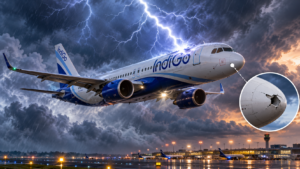
The recent IndiGo incident shows what can happen when aircraft meet severe weather
Have you ever wondered what would happen if lightning struck an aircraft in the middle of a flight?
Yes, it can happen.
In fact, commercial aircraft encounter lightning from time to time, and they are designed with systems and structures that help protect the aircraft and its passengers. However, a lightning strike or severe thunderstorm can still cause localized damage, which is why aircraft are carefully inspected afterwards.
The Recent IndiGo Example
A recent incident involving an IndiGo flight travelling from Patna to Lucknow brought this topic into the spotlight.
The aircraft encountered severe weather during the flight. Initial reports suggested that lightning may have been involved, while IndiGo stated that the aircraft encountered unfavourable weather, including hail, which resulted in damage to the aircraft’s nose radome. The aircraft subsequently landed safely at Lucknow with 104 passengers and 6 crew members on board. Everyone was reported safe.
The aircraft was then taken out of service for a detailed technical inspection.
What Happens When Lightning Hits an Aircraft?
When lightning strikes an aircraft, the electrical current generally travels along the aircraft’s outer surface and exits through another point, rather than simply passing through the cabin.
Aircraft are designed with lightning protection to help prevent dangerous effects on passengers, fuel systems and critical equipment.
However, lightning can sometimes cause:
- Minor structural damage
- Damage to the aircraft’s outer surface
- Electrical or electronic system effects
- Damage to components such as the radome
Severe thunderstorms can also bring hail, turbulence, heavy rain and strong winds, which may create additional risks for aircraft.
Does a Lightning Strike Mean an Aircraft Will Crash?
No.
Modern commercial aircraft are engineered to withstand lightning strikes and continue safe flight and landing. The FAA requires aircraft designs to provide lightning protection, and airlines have procedures for inspecting aircraft after such events.
The recent IndiGo incident is a good example.
Despite encountering severe weather and sustaining damage, the aircraft landed safely and all passengers and crew were unharmed.
What Can Aviation Students Learn From This?
For aviation students, incidents like this demonstrate why weather awareness and aviation safety are so important.
Pilots and aviation professionals need to understand:
Thunderstorms – how they affect flight operations
Lightning – how aircraft are protected
Hail – its potential to damage aircraft surfaces and components
Turbulence – how changing weather can affect aircraft
Emergency procedures – how crews respond when conditions become challenging
Aviation is not only about flying an aircraft.
It is about understanding the environment, identifying risks and making safe decisions.
Every flight is a combination of technology, training, weather awareness and human judgement.
That is what keeps aviation moving safely.